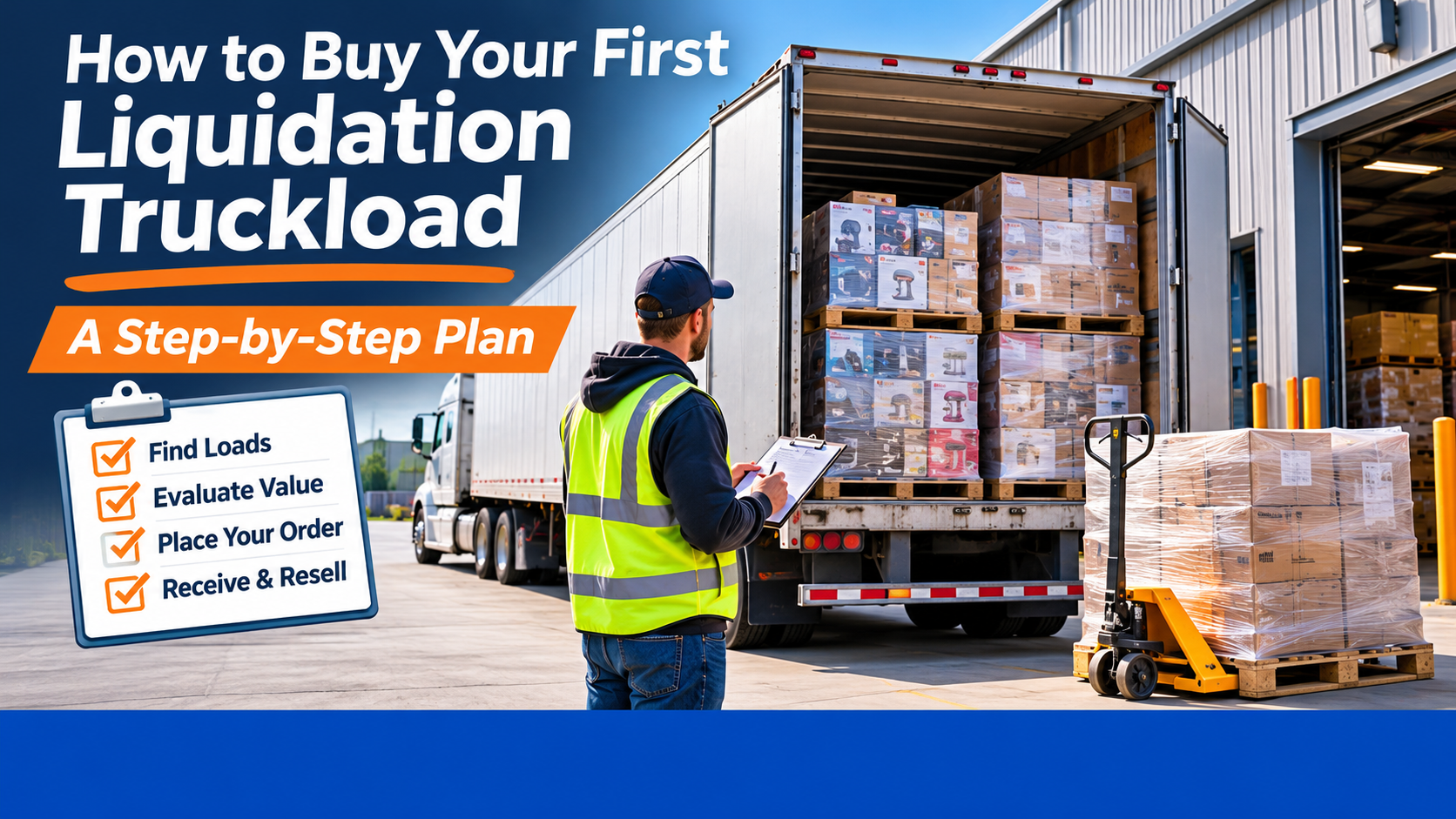
How to Buy Your First Liquidation Truckload: A Step-by-Step Plan
How to Buy Your First Liquidation Truckload: A Step-by-Step Plan
A full trailer of big box merchandise is a lot of product, a lot of money, and a lot of pallets landing in one afternoon. That's exactly why first-time buyers get nervous. The model itself is sound. What trips people up is skipping the planning that happens before the purchase: the budget, the load type, the dock, and the resale plan.
This walkthrough covers how to buy liquidation truckload inventory in the order you'll actually do it. You'll set a real budget, choose a load that fits how you sell, request a quote with the right questions, and schedule delivery so nothing surprises you at the dock. Skip a step and it usually shows up later as a cost.
Know What You're Actually Buying
A liquidation truckload is a trailer of merchandise that a retailer has moved out of its normal sales channel. The product might be overstock, store returns, shelf pulls, seasonal leftovers, or discontinued items. You buy it at a fraction of original retail, and your job is to turn it back into revenue through your own channel: a store, a flea market booth, online marketplaces, or wholesale to other resellers.
Two things set the price and the risk: the condition of the goods and how much you know about the contents ahead of time. Customer returns cost less than new overstock, but they need more sorting and testing. A load with a detailed manifest costs more than a mixed load without one, but it lets you estimate resale value before you commit. If you want to see the full process from first inquiry to delivery, the How it works page lays it out so you know what to expect.
Build a Landed-Cost Budget, Not a Sticker-Price Budget
The most common first-timer mistake is budgeting only for the load price. The number that matters is your landed cost: what you've spent by the time the goods are on your shelves and ready to sell. That includes freight, any delivery fees, labor to unload and sort, shelving or packaging supplies, and a cushion for units you can't sell.
Here's a simple example, with numbers made up for illustration only. Say a load is priced at $7,500, freight is $1,100, and you expect about $400 in labor and supplies. That's $9,000. Add a 12 percent cushion for damaged or dead units, roughly $1,080, and your working budget is about $10,000. If the load carries $30,000 in listed retail value and you sell through at an average of 40 percent of retail, you'd bring in about $12,000. That's a thin margin before selling fees, which is why you run the math first.
Also decide how much cash you can leave tied up. A truckload doesn't sell in a week. Plan for the inventory to take weeks or months to move, and don't spend money you'll need for rent or payroll.
Editorial’s Rule: Budget around landed cost, not the sticker price, and keep a cushion of roughly 10 to 15 percent for freight surprises, labor, and unsellable units.
Pick a Load Type That Matches How You Sell
Choose the load around your sales channel, not around the cheapest price per pound. A booth or small retail store usually does well with general merchandise, because the mix keeps shelves interesting. An online seller who lists item by item may prefer a category load, such as home goods, tools, or small appliances, since it's easier to photograph, describe, and price in batches.
Think about the physical side too. Furniture and large appliances eat floor space and need a liftgate or forklift. Electronics can carry higher resale value, but they also bring testing time and more variation in condition. Soft goods and housewares are easier to handle but often sell at lower price points. Pick the category you can store, test, and price with the people and space you already have.
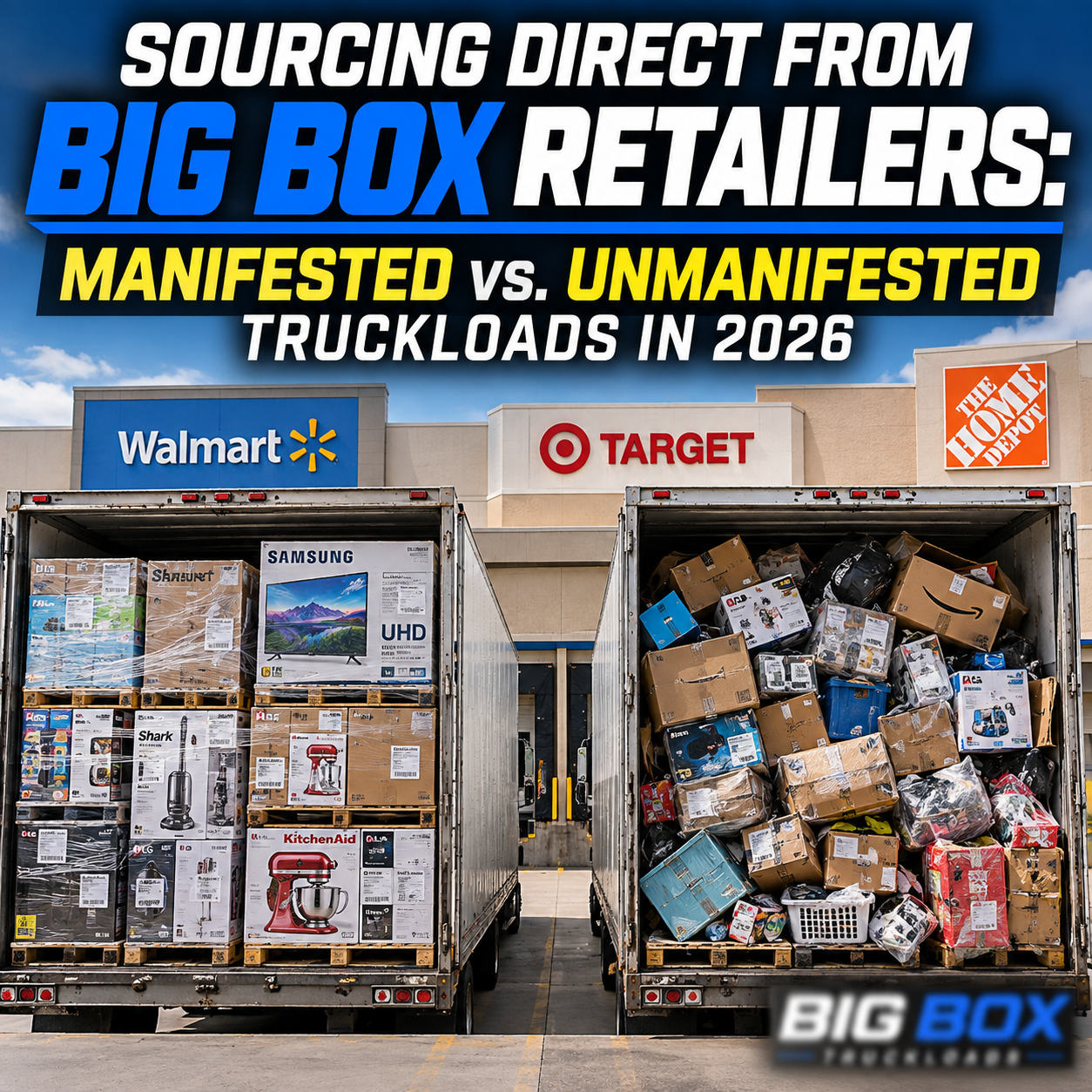
It also helps to understand where this inventory comes from and why retailers move it. Our piece on sourcing direct from big box retailers in 2026 explains how direct sourcing works and what it means for the loads you'll see.
Request a Quote With the Right Questions
Once you know your budget and load type, you're ready to get a quote. Before you reach out, write down your target budget, the category you want, your delivery address, and whether it's a commercial dock or a residential location. Those four details let a sourcing rep point you to something realistic instead of sending you a generic list.
Then ask the questions that protect you:
What's the condition mix? New overstock, returns, and shelf pulls behave very differently. Is there a manifest, and how detailed is it? You want to know whether it lists items, quantities, and retail values. What's included in the price? Confirm whether freight is quoted separately. How is the load packed? Palletized and shrink-wrapped loads are far easier to unload than floor-loaded ones. What are the payment and cancellation terms? Get these in writing before money moves.
A seller who answers these plainly is a good sign. Vague answers on condition or contents are a reason to slow down.
Plan Delivery Before You Pay
Delivery is where first-timers get caught off guard. A 53-foot trailer needs room to maneuver and a way to get pallets off. Check whether your location has a loading dock. If not, you'll likely need a liftgate service, and the driver may need to unload to the curb or a pad where you can move pallets with a pallet jack or forklift. Some residential areas and tight streets can't handle a full trailer at all, so you may need to meet the truck at a nearby commercial lot or terminal.
Ask about the delivery window and appointment process. Have your crew lined up for that day, because trucks don't wait long and detention charges can appear if unloading drags on. Know what equipment you need on site: pallet jack, forklift access, gloves, box cutters, and space to stage pallets.
Receive, Inspect, and Sort the Same Week
When the truck arrives, check the pallet count against the paperwork before the driver leaves. Look for visible damage to the trailer, pallets, or wrap, and note any problems on the delivery receipt before you sign. That written note is your record if you need to raise an issue later.
Then work in a system. Break pallets down by category, set aside anything damaged or incomplete, and test what needs testing. Price in tiers: quick movers at a clear discount, higher-value items listed individually, and slow items bundled or marked down. If you want the background on who we are and how we've handled sourcing for over 20 years, read our liquidation sourcing guide.
Track what you paid, what each category sold for, and how long it took. That record turns your first load into a plan for the second one.
Mistakes to Avoid on Your First Load
Most first-load problems are predictable. Buyers stretch their budget to the last dollar and have nothing left for freight or labor. They choose a category they don't know how to price. They assume every unit will sell. They forget that storage space is a cost, too.
Start with a load size and price you can afford to be wrong on. Choose a category you understand, give yourself time to sell, and treat the first truckload as tuition as much as inventory. Buyers who plan for the dock, the sort, and the sell-through tend to reorder with confidence.
More Related Posts