Where Does Big Box Store Returned Merchandise Actually Go?
Where Does Big Box Store Returned Merchandise Actually Go?
Ask ten shoppers where do returned items go after they hand a blender back at the service desk, and most will say it goes back on the shelf. Sometimes it does. More often it starts a trip through a system most people never see, and that trip decides whether the item gets resold, repaired, donated, or sold off by the truckload.
I've sourced directly from America's largest retailers for over 20 years, and the pattern is consistent even when the products change. This post walks the full path from store to distribution center to liquidator to buyer, so you know what's happening to the goods before they reach a pallet you might buy.
Where Do Returned Items Go After the Customer Leaves?
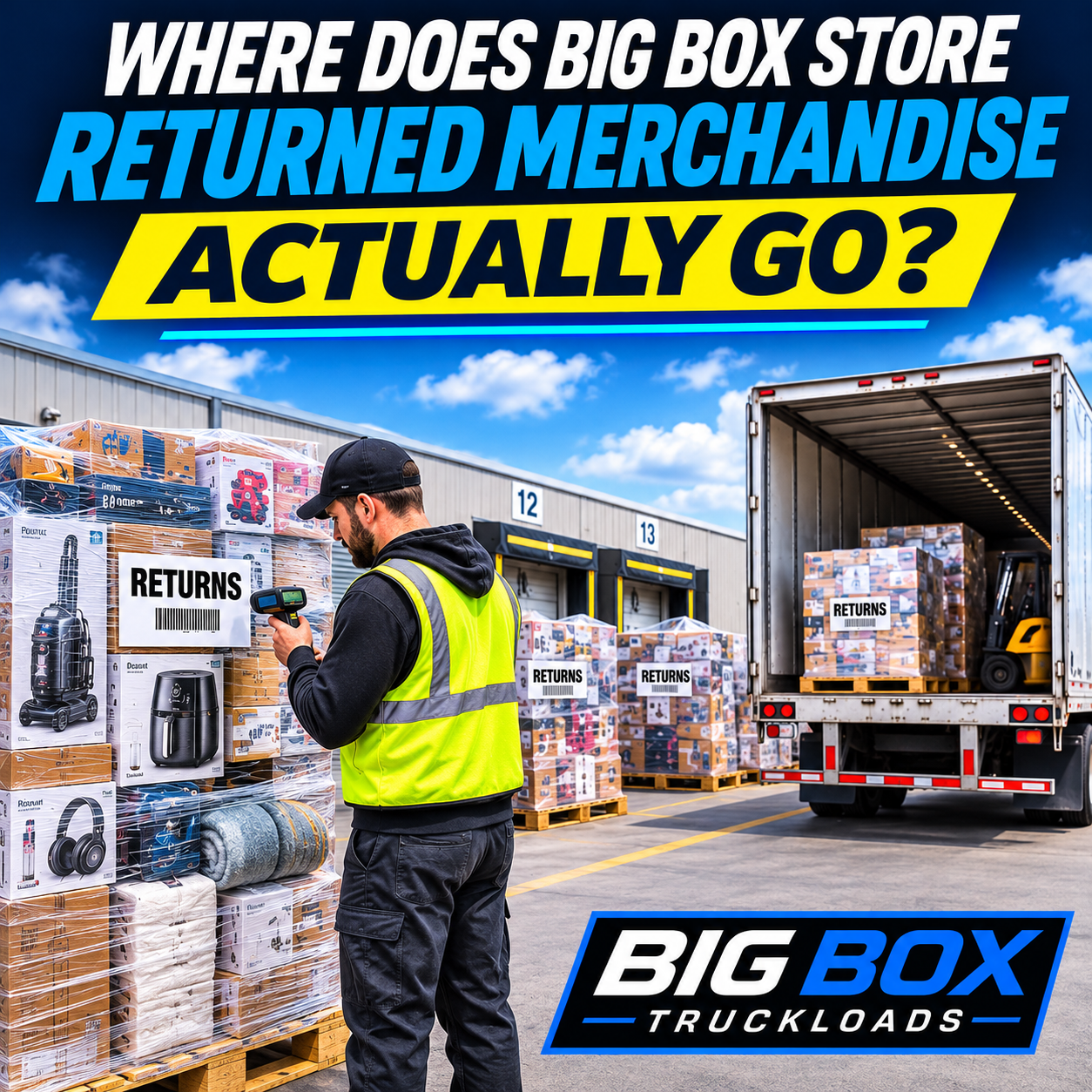
The first stop is the returns desk, and the first decision is made in under a minute. An associate checks whether the item is sealed, complete, and sellable. If it is, it often goes back to the floor. If it isn't, it goes into a returns cage or bin in the back of the store.
That cage is where most of the interesting inventory starts. It fills with open-box electronics, items missing accessories, damaged packaging, and products that came back after a holiday. It does not stay there long. Stores have limited backroom space, so the cage is emptied on a schedule and the goods are staged for pickup.
If you want to see how that flow ends up as a purchase you can make, How it works lays out our process from sourcing through delivery. The rest of this post covers what happens before that point.
The Store-Level Decision: Restock, Send Back, or Send Out
Every returned item falls into one of a few buckets, and the retailer's policy usually makes the call, not the associate's mood.
Restock. Sealed or like-new items with all parts present go back into sellable inventory. This is the best outcome for the retailer and the smallest share of what we see.
Return to vendor. Some defective or recalled products are eligible for credit from the manufacturer. Those get routed back up the chain, and they never reach a liquidator unless the vendor declines them.
Send to a returns or processing center. Everything else gets consolidated and shipped out. This includes open-box goods, cosmetic damage, customer returns with missing pieces, and seasonal overstock that never sold through.
Stores also generate plain overstock that was never opened. Shelf resets, discontinued lines, and seasonal items that miss their window all get pulled and sent the same direction.
The Distribution Center and Returns Processing Stage
Trucks carry the consolidated goods from stores to a regional distribution center or a dedicated returns facility. This is where volume gets sorted. Workers scan items, grade them by condition, and decide the next disposition: restock, refurbish, vendor credit, donation, recycling, or liquidation.
Grading is where the economics get real. A retailer is balancing labor cost against recovery value. A $15 item that needs ten minutes of testing may not be worth the handling, while a $400 appliance probably is. Low-value, high-effort goods tend to skip the refurbishing line and move straight to bulk sale.
Goods that don't earn their keep inside the retailer's system get released to the liquidation channel. If you want the background on how we fit into that chain, our liquidation sourcing guide covers who we are and how long we've been working these relationships.
Where Liquidators Enter the Picture
A liquidator takes the retailer's unwanted inventory in bulk and finds a home for it. Retailers prefer this to selling piecemeal because it clears space fast, produces predictable recovery, and keeps their brand away from discount channels.
Some liquidators buy outright and resell. Others run auctions on the retailer's behalf, which means buyers pay a winning bid plus extra charges. If you're comparing sources, it's worth knowing how those add-ons work, and this breakdown of auction buyer's premium and lot fees shows how a winning bid can end up costing more than the number on the screen.
Direct sourcing is a different model. When a liquidator has a standing relationship with a retailer, goods can be allocated by the truckload with a known manifest, known category mix, and a fixed price instead of a bidding war.
How a Truckload Actually Gets Built
A truckload isn't random. Goods arrive on pallets, usually grouped by category or by the source facility. A pallet might hold small appliances, home goods, or mixed general merchandise. Pallets are then assembled to fill a trailer, typically somewhere around 24 to 26 pallets for a standard 53-foot trailer, though the count shifts with pallet height and weight.
Condition mix matters more than most new buyers expect. A load of customer returns will contain working items, items missing parts, and items that are flat-out broken. A load of shelf-pull overstock will skew toward new, unopened goods. Those two loads can look similar on a manifest and perform very differently once you start reselling.
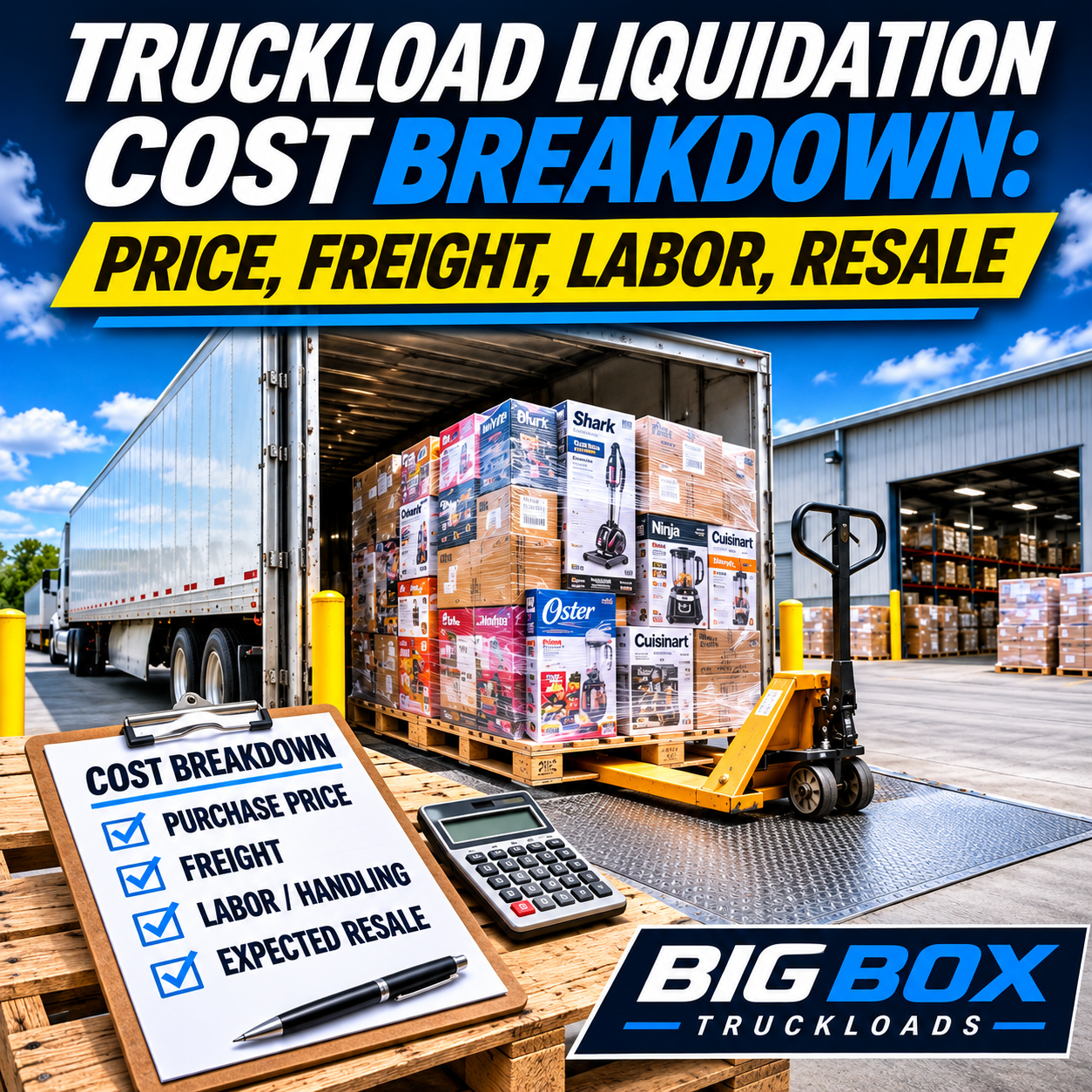
The price you pay is only one piece of the economics. Freight, labor to unload and sort, and your resale channel fees all affect margin. This truckload liquidation cost breakdown walks through each of them with example numbers.
Stephen’s Rule: Stephen's Rule: Before you buy any load, ask what share is customer returns and what share is shelf-pull overstock. That one answer predicts your sell-through better than the retail value on the manifest.
What This Means If You're Thinking About Buying
Knowing the path helps you read a listing. If a load is described as customer returns, expect testing, cleaning, and some units that won't sell. If it's described as overstock or shelf pulls, expect more sealed product but possibly older or seasonal inventory. Neither is better in the abstract. It depends on your resale channel and how much labor you can absorb.
A simple example, with made-up numbers: say a load lists at $40,000 in retail value and you pay $8,000. If you resell at 30% of retail and lose a portion to unsellable units, freight and labor can eat a large piece of what's left. Run the math on a conservative sell-through, not an optimistic one.
Start small if you're new. Pick one category you already understand, price your resale realistically, and plan your space before the truck arrives. When you're ready to talk through a specific load or category, you can get a quote and we'll walk you through what's available.
More Related Posts