Post-Holiday Returns: When to Buy January Liquidation Truckloads
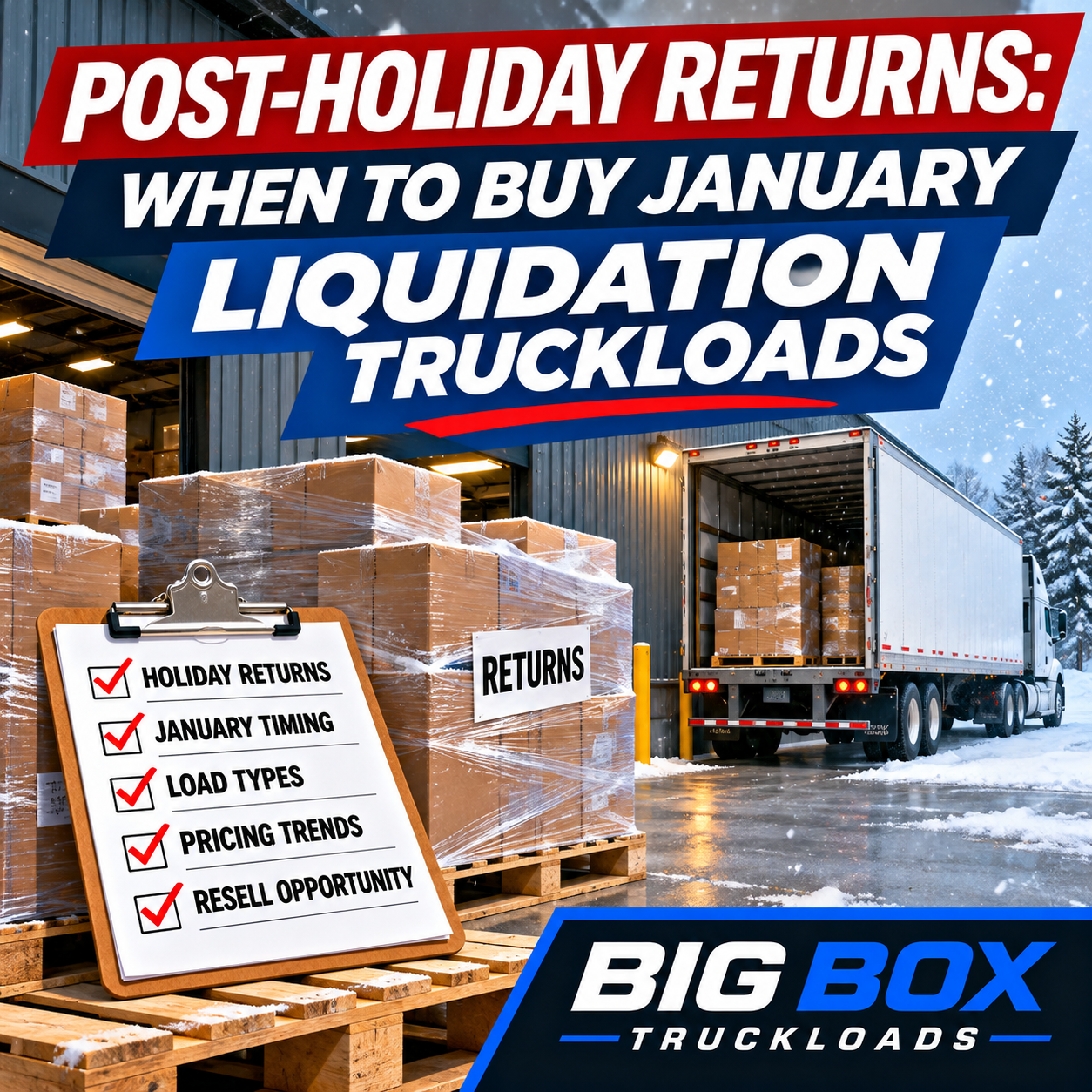
Post-Holiday Returns: When to Buy January Liquidation Truckloads
Every January, the same thing happens to resellers. The best returns pallets move through the market in a few weeks, and then February arrives and the usual sources look thin. Buyers who planned in November already have trucks coming. Everyone else bids on what's left.
The fix is timing. Post-holiday liquidation truckloads are fairly predictable once you understand how returns travel from the store counter to the liquidation dock, and reserving inventory early is what separates a stocked Q1 from a scramble. Here is when the volume lands, what's usually in it, and how to set up your buying now.
Why return volume peaks after Q4
Between Black Friday and Christmas, big box stores push an enormous amount of merchandise out the door. A portion of it comes back. Wrong size, duplicate gifts, gadgets that didn't work as expected, items bought on impulse and regretted by New Year's Day. Holiday purchases also tend to carry extended return windows, so returns don't stop on December 26. They keep arriving through January and often into February.
At the same time, stores need shelf space for the next season. Leftover holiday merchandise and slow-moving overstock get cleared to make room. The result is that Q1 liquidation supply leans heavily on two sources: customer returns and seasonal or overstock product. Both flow into the same channels, which is why the volume feels so sudden.
When returns actually reach liquidation
A returned item doesn't go from the customer's hands to a liquidation pallet in a day. It's taken back at a store or processed through an online return, consolidated at a return center, inspected, and then assigned a disposition: restock, send back to the vendor, donate, or liquidate. Only the last group becomes liquidation inventory, and it still has to be sorted, palletized, and sold before it ships.
That chain usually takes weeks. As a rough, example timeline (it varies by retailer and category): holiday returns pile up from late December through January, processing runs from mid-January into March, and the heaviest availability tends to land from late January through the first part of spring. So when people say they're "buying in January," the commitments that matter are often made in November and December.
If you haven't bought this way before, our How it works page walks through each step from reservation to delivery, so you know what to expect before you commit to a load.
Why reserve post-holiday liquidation truckloads in November
Supply gets spoken for early. Buyers who tell their sourcing contact what they want, what they can spend, and when they can take delivery get matched as loads form. Buyers who show up in February are choosing from what remains, and the categories most resellers want (small appliances, tools, home goods, fitness) tend to go first.
Reserving is not the same as paying for something you've never seen. It means getting your categories, budget, and delivery window on the record so you're in line when inventory is available. It also gives you control over freight timing, which matters more than people expect when a dock or garage is already full of Q4 leftovers.
Stephen’s Rule: Reserve for the month you can sell in, not the month the pallets exist. Book early, then set the delivery window around your space, cash, and sales channel.
What's actually on a January truck
Expect a mix. Customer returns arrive opened, repackaged, or untested, and some units won't work or will be missing parts. Shelf pulls and overstock are usually cleaner. Seasonal items such as holiday décor, gift sets, and toys may be part of the load, and those are a decision point: sell them at a steep discount right away or store them for next Q4.
Focus on evergreen categories if you want fast turns through spring. Fitness gear rides the New Year's resolution wave. Tools, outdoor equipment, and garden items start moving as the weather improves. Kitchen and small appliances sell year-round. Ask what the condition mix looks like before you book, and decide in advance what you'll do with anything that doesn't test out, whether that's parts, bulk lots, or a refurbish-and-resell route.
A worked example (illustrative numbers only)
Say you buy a mixed general merchandise load. These figures are examples, not a quote or a promise. The truckload price is $7,500 and freight is $1,500, so your landed cost is $9,000. The manifest shows $45,000 in original retail value.
Now assume 80% of units are sellable and they move at an average of 35% of retail. That's $45,000 × 0.80 × 0.35, or $12,600 in revenue. Subtract the $9,000 landed cost and you're at $3,600 before labor, platform fees, storage, and the time it takes to test and list items.
That's a workable margin, but not a fat one. It shows why the details matter: a few points of sell-through or a few percentage points of average sale price can swing the result a lot. Buy the category mix you actually know how to sell, and run your own numbers with conservative assumptions.
Build your Q1 and spring plan now
Start with four decisions. Set a budget that covers freight and handling, not just the load price. Pick two or three categories that match your sales channel, whether that's a storefront, online marketplaces, or weekend events. Confirm you have the space and the labor to process a full truck. Then choose a delivery window that doesn't collide with your other stock.
Consider splitting your buying. One load in late January or February for the returns surge, and another in spring for fresh overstock, lets you keep cash moving instead of sitting on one giant pile. If this is your first truck, read our step-by-step plan for buying your first liquidation truckload before you reserve anything.
For background on where our loads come from and how we've sourced directly from the largest retailers for over 20 years, see our liquidation sourcing guide. When you know your categories, budget, and timing, get a quote and we'll tell you what's forming for the Q1 window.
More Related Posts